






Why Businesses Are Turning to the Best SASE Solutions
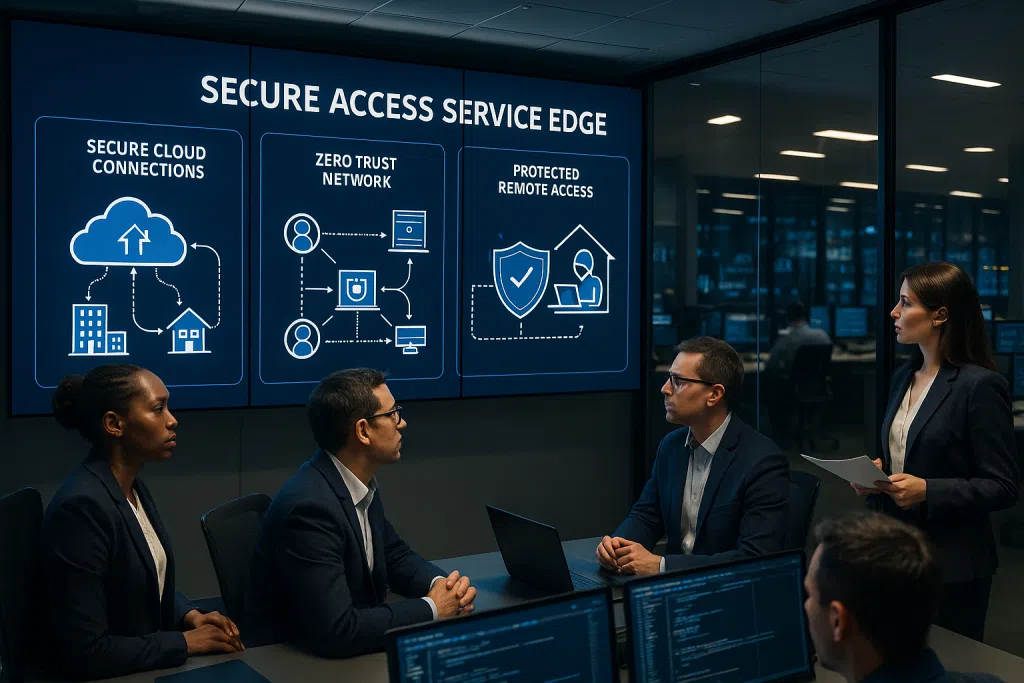
The rapid move to cloud-based operations, hybrid work, and increasing cyber threats has forced organizations in healthcare, finance, law, and pharmaceuticals to rethink their network and security strategies. Enter Secure Access Service Edge, also known as SASE. This modern security framework decouples network and security controls from traditional hardware, combining both into a unified, cloud-delivered model called SASE network architecture.
For small and mid-sized businesses, especially those under strict regulatory scrutiny such as HIPAA or FINRA, adopting the best SASE solutions isn’t just about modernization – it’s about business survival and risk minimization. SASE changes how access, security, and user experience work across remote offices, roaming employees, and cloud applications. But not all SASE platforms deliver the same level of security and management. Selecting the right model can mean the difference between streamlined compliance and frustrating gaps that leave sensitive data exposed.
Understanding the features, integration capabilities, and vendor experience is essential for any business planning to implement SASE. Imagine a midsize medical practice enabling doctors to access EMR systems from clinics and home offices, or a finance group needing to protect confidential spreadsheets from unauthorized network access or cyberattacks. SASE brings these business cases into a single platform.
If you’re considering this transformation, it’s a good time to learn how top-performing SMBs leverage SASE for compliance, resilience, and efficiency. Book an initial Discovery meeting to see how SASE could fit your unique network and compliance needs. Schedule your session now.
Core Components of the SASE Security Framework
At its heart, Secure Access Service Edge weaves together previously siloed technologies, like firewalls, virtual private networks (VPNs), WAN optimization, and zero trust network access (ZTNA), into one holistic framework. Let’s break down the key elements you’ll find in the best SASE solutions, and why they matter to regulated industries and IT managers.
1. Cloud-Native Networking and Security
Traditional perimeter controls are outmatched by users working from home, mobile devices, or multiple branch offices connecting to cloud systems. SASE solutions virtualize these controls, managing access security, threat detection, and application performance through a distributed cloud environment.
With SASE network architecture, every user, no matter their location, connects securely through cloud points-of-presence. This architecture enables easier scaling, less manual intervention, and geographic flexibility. For local professional service firms or growing healthcare networks, that translates to consistent policy enforcement whether a user is at HQ, at a client site, or working remotely.
2. Zero Trust Network Access (ZTNA)
Zero trust is a major pillar in SASE. Rather than assuming a user or device on the “trusted” internal network is safe, ZTNA enforces strict, contextual checks for every session. If a CPA logs in from a new laptop, the system validates identity, device security posture, and access rights before connecting to applications. This sharply reduces the risk from lost, stolen, or compromised devices, a critical improvement over legacy VPNs.
3. Secure Web Gateway (SWG) and Cloud Access Security Broker (CASB)
Modern SASE platforms monitor all outbound and inbound traffic for suspicious activity, block malicious sites, enforce acceptable use policies, and prevent confidential data leakage to unapproved cloud apps. The SWG and CASB modules are indispensable for law offices sharing sensitive documents or clinics handling patient information across cloud-based records and telehealth platforms.
4. Unified Management and Real-Time Policy Enforcement
Managing firewalls, endpoint agents, and MPLS links across multiple sites wastes time and exposes cracks in security coverage. SASE platforms streamline control into a single administrative console, often with the ability to segment policies per user, location, or device. This means busy IT teams can address threats, adjust policies, and demonstrate compliance without juggling multiple dashboards or running site-by-site software updates.
A recent Gartner report projects that by 2025, at least 60% of enterprises will have explicit strategies and timelines for adopting SASE frameworks, up from just 10% in 2020. The shift underlines SASE’s relevance for any SMB evaluating modern IT risk management.
Evaluating the Best SASE Solutions for Your Industry
Every business shares the need for robust access control and strong security, but the best SASE solutions often vary based on regulatory requirements, workflow complexity, and IT resources. Let’s explore some industry examples and essential evaluation criteria.
Healthcare: HIPAA and HITECH Compliance
A SASE security framework with granular CASB and auditing ensures patient data never passes through unsecured connections, satisfies audit trails, and guards against phishing or ransomware. Look for solutions with automated incident reporting, data loss prevention, and integrations to EHR and telehealth platforms.
Finance and Legal: Protecting Sensitive Communications
End-to-end data encryption, multi-factor authentication, and detailed logging are key. Firms handling legal briefs or financial records must confirm that every access event is logged, and any device connecting to the system is properly secured. In these environments, SASE’s granular policy assignment lets firms configure access by group (e.g., partners, paralegals, contractors) and respond quickly to compliance changes.
Pharmaceutical and Research: Safeguarding Intellectual Property
Controlling cloud app access, blocking unsanctioned file sharing, and geofencing access by physical location are common needs. Here, SASE network architecture stands out by using geolocation controls and behavior analytics, identifying unusual download patterns or unauthorized access attempts.
Criteria for Choosing a Solution
For all these industries, selecting the right SASE platform depends on:
- Integration with core line-of-business software (e.g., EMR, document management systems)
- Support for multi-factor authentication and device compliance checks
- Real-time threat intelligence and response workflow automation
- Unified visibility and reporting for audit and regulatory evidence
- Local support and understanding of regional compliance nuances
Partnering with a provider experienced in SASE deployments and compliance in your region improves both project speed and outcome quality. Blueclone Networks, for example, supports organizations across Central New Jersey, Eastern Pennsylvania, and the NYC Metro with tailored SASE configurations and ongoing management.
At this stage in your journey, don’t just look at product feature lists, consider how a SASE provider supports your business, from deployment through ongoing compliance. Ready to explore tailored options for your organization? Book an initial Discovery meeting to start the conversation.
SASE Network Architecture: Building Blocks for Modern SMBs
Understanding SASE network architecture helps businesses visualize how data, users, and applications interact securely in dispersed environments. Here’s what goes into a well-architected SASE deployment:
Distributed Points-of-Presence (PoPs)
Instead of flowing all traffic through a central office or a static data center, the best SASE solutions use globally or regionally distributed PoPs. This setup brings secure connectivity closer to remote workers and branch offices, reducing latency and optimizing application performance.
For a healthcare network with multiple clinics, each site and practitioner’s laptop connects through the nearest PoP, getting security checks and traffic inspection before accessing sensitive apps or data.
Integrated SD-WAN
Software-defined wide-area networking (SD-WAN) is baked into leading SASE platforms. It manages multiple internet links, prioritizes critical applications, and enforces traffic shaping, all guided by security policies. A law firm using multiple cloud legal tools gets resilient, high-speed access without worrying about unreliable home or branch internet connections.
Policy-Based Routing and Microsegmentation
SASE uses policy engines to control exactly which users and devices can reach specific apps or network segments. A pharmaceutical firm could grant only its R&D staff access to proprietary formula files, while blocking external contractors or interns from these folders entirely, regardless of their network connection source.
API-Driven Management and Automation
SASE’s flexible APIs connect with existing identity providers, compliance tools, and analytics platforms. For IT managers, this means automated user onboarding, offboarding, and incident handling, critical for environments with high staff turnover or regular project team changes.
According to a 2025 study by Forrester, firms that implemented a cloud-native SASE network reported a 30% decrease in security incidents linked to remote work, underscoring the tangible risk reduction SASE brings to the table.
Comparing Leading Secure Access Service Edge Providers
The SASE market has flourished, attracting established security vendors, cloud giants, and agile startups. But for SMBs, especially in regulated sectors, feature sets, compliance-adaptability, and support models separate the top players from the rest.
Unified vs. Modular Platforms
Some providers offer an all-in-one SASE service, while others build modular architectures allowing add-ons like advanced malware sandboxing or industry-specific compliance reporting. For businesses with existing legacy investments, modularity facilitates smoother, phased transitions.
Compliance Certifications
The best SASE solutions designed for HIPAA, PCI-DSS, and FINRA environments publish proof of independent audits and continually update features to align with regulatory developments. Ask your shortlisted vendors for up-to-date compliance documentation relevant to your industry.
Customer Support and Local Expertise
Beyond initial setup, ongoing support is critical. Companies like Blueclone Networks strengthen SASE deployments with 24/7 US-based helpdesk support, certified engineers, and local compliance insight. When an incident occurs or policies change due to regulatory updates, rapid response can be the difference between downtime and business as usual.
Integration and Interoperability
For organizations already using Microsoft 365, Google Workspace, or custom industry applications, interoperability streamlines user experience and amplifies security effectiveness. Industry reviews, such as those collected by Cybersecurity Magazine, emphasize the importance of broad API support and prebuilt connectors in reducing deployment costs and timelines.
When comparing products, rely on independent market analyses and real-world case studies. The Gartner Magic Quadrant for SASE (2025) sheds light on which vendors consistently deliver performance, vision, and customer satisfaction. Platforms that regularly appear in the Leaders quadrant are more likely to offer stable, secure, and fully-featured solutions suitable for SMBs with complex compliance needs.
Best Practices for Implementing SASE in Small and Mid-Sized Businesses
Transitioning to a SASE security framework can seem overwhelming, but a methodical approach maximizes benefits and keeps disruption minimal.
Conduct a Security Readiness Assessment
Evaluate your current infrastructure, user profiles, and cloud app ecosystem. Identify legacy systems and applications that may require phased migration. Document regulatory requirements specific to your sector, such as HIPAA or SOX, and build them into your SASE policy baseline.
Prioritize High-Value Use Cases
Start with departments or workflows most exposed to risk: remote access to client records, staff using unmanaged devices, or teams handling confidential client data. Customize policies to enforce zero trust, logging, and data loss prevention in these critical areas first.
Engage Stakeholders Early
Involve not only your IT team but also compliance officers, business leads, and end users. This broad input ensures your secure access service edge deployment matches real business needs and reduces resistance to change. Quick-win pilots, such as adding ZTNA controls for remote legal associates or physicians, build support for wider rollout.
Phase the Rollout and Train End Users
Many SMBs choose to offload initial configuration and migration tasks to experienced SASE partners. This approach speeds up deployment and reduces errors. Once the technical foundation is live, conduct targeted user training to explain new login procedures, device requirements, and reporting workflows.
Monitor, Review, and Optimize
Leverage your SASE provider’s real-time analytics, compliance dashboards, and incident reports. Regularly review these with your partner, responding quickly to policy drift, new cyber threats, or regulatory updates. As your business grows or changes, your SASE platform adapts alongside it.
For those seeking to modernize security and networking in a way that’s compatible with compliance pressures and limited IT staff bandwidth, SASE represents both a risk reducer and an efficiency booster. If your teams need a guided path from assessment through to managed services and continuous improvement, book an initial Discovery meeting to get started.
Real-World SASE Success Stories in Regulated Industries
Understanding how Secure Access Service Edge makes a difference isn’t just about technical specs, it’s about seeing real improvements in business operations, security posture, and compliance peace of mind. Below, we present some anonymized case study highlights from the regulated SMB sectors most impacted by digital transformation.
Healthcare Network: Enhancing Security, Enabling Growth
A mid-sized group of medical clinics in Central NJ needed to support telemedicine services while staying fully HIPAA and HITECH compliant. Before SASE, remote access was a pain point, and IT staff struggled with manual patching and device verification. Implementing SASE allowed seamless, secure patient data access across clinics and remote physician workstations, protected by ZTNA and detailed session monitoring. The unified dashboard meant that security policies and compliance reporting could be managed in a fraction of the time. Following deployment, the practice reduced regulatory audit prep time by 45% and saw fewer helpdesk tickets tied to remote logins.
Legal Firm: Safeguarding Attorney-Client Confidentiality
A Princeton-based law firm had expanded to serve clients throughout Eastern PA and NYC. Their old approach, built on VPN tunnels and scattered firewall appliances, made onboarding new attorneys difficult and increased the risk of data leaks. Transitioning to a modular SASE solution gave them granular user access controls, audit trails for every file touch, and integrated malware filtering. This new foundation helped the firm pass stringent IT audits required for multi-state legal practice, and attorneys now confidently share sensitive discovery and deposition files with remote co-counsel without hassle or fear.
Pharmaceutical SMB: Protecting Intellectual Property on the Cloud
A pharmaceutical research company undergoing a cloud migration faced trepidation around IP leakage and global team collaboration. SASE allowed them to restrict access to experimental results based on employee location and device security status. With built-in geofencing and real-time analytics, IT leadership rapidly detected unusual download attempts and stopped them before any sensitive data left the environment. Cloud application usage policies helped reduce “shadow IT” by 60%, and the team’s transition to remote work ran smoothly, untouched by ransomware or data exfiltration attempts.
Future Trends: SASE and the Evolution of Network Security
As remote work, cloud adoption, and cyber threats accelerate, SASE continues to evolve. Keeping an eye on these trends will help SMBs leverage future-proof investments and remain ahead of attackers and auditors alike.
AI-Driven Threat Detection and Response
Leading SASE solutions now embed AI and machine learning algorithms within their platforms. This allows for faster detection of anomalies, previously unseen malware, or insider threats. For example, real-time user behavior analytics can automatically restrict access or trigger targeted re-authentication when suspicious patterns are observed, a crucial defense as attacks grow more sophisticated.
Extended IoT and Device Security
With the explosion of IoT devices and remote medical equipment, next-generation SASE platforms are rolling out features for continuous IoT risk monitoring and device-specific policy enforcement. This is especially important in healthcare and pharma, where a compromised device can lead to data breaches or even disrupt critical operations.
DevSecOps and SASE Integration
SMBs embracing DevSecOps are turning to SASE to unify security policies between development pipelines and production environments. Automated security configuration management, continuous compliance checks, and secure code repository access can be layered directly into CI/CD workflows, reducing friction between IT, security, and engineering teams.
Privacy, Compliance, and Sovereignty
As global data privacy regulations mature (from updated HIPAA guidance to the EU’s GDPR and beyond), SASE frameworks are adapting with location-aware data processing, local cloud options, and automated compliance evidence generation. Businesses should watch for solutions that offer customizable data residency controls to avoid accidental regulation violations.
Greater Customization and Third-Party Integration
APIs and prebuilt connectors are becoming ever more important in SASE adoption. Vendors who invest in ecosystem partnerships, enabling seamless links with major SaaS tools, HR systems, compliance auditors, or cyber insurance reporting, will stand out for SMBs aiming to maximize the value of their secure access service edge investment.
By considering where the SASE landscape is headed and selecting partners who continually update their capabilities, businesses can protect not just today’s operations but tomorrow’s innovations as well.
Frequently Asked Questions About SASE Solutions
SASE, or Secure Access Service Edge, is a cloud-based security framework that combines network and security services into a single solution. It is especially valuable for organizations with remote workers, multiple locations, or strict data privacy regulations, allowing secure and compliant access to applications from anywhere.
Unlike traditional models that use physical firewalls and VPNs at the office perimeter, SASE uses cloud infrastructure to deliver consistent security and access controls globally. That means better protection for remote users, faster setup for new offices, and more efficient compliance tracking, all within a unified platform.
Industries such as healthcare, finance, legal, and pharmaceuticals, where data protection and regulatory compliance are crucial, see the highest benefits. SASE frameworks make it easier to meet HIPAA, PCI-DSS, and other requirements by embedding compliance into every user and data session, regardless of location.
Yes. Leading SASE solutions provide API-level integration for popular cloud productivity platforms. This ensures secure, policy-driven access to email, files, and shared data while preventing unauthorized downloads or risky app integrations.
Timelines vary depending on business size and complexity, but many SMBs can roll out core SASE features, such as ZTNA, CASB, and unified management, within a few weeks. Working with a local partner who understands compliance and cloud migration can accelerate onboarding and reduce disruption.