






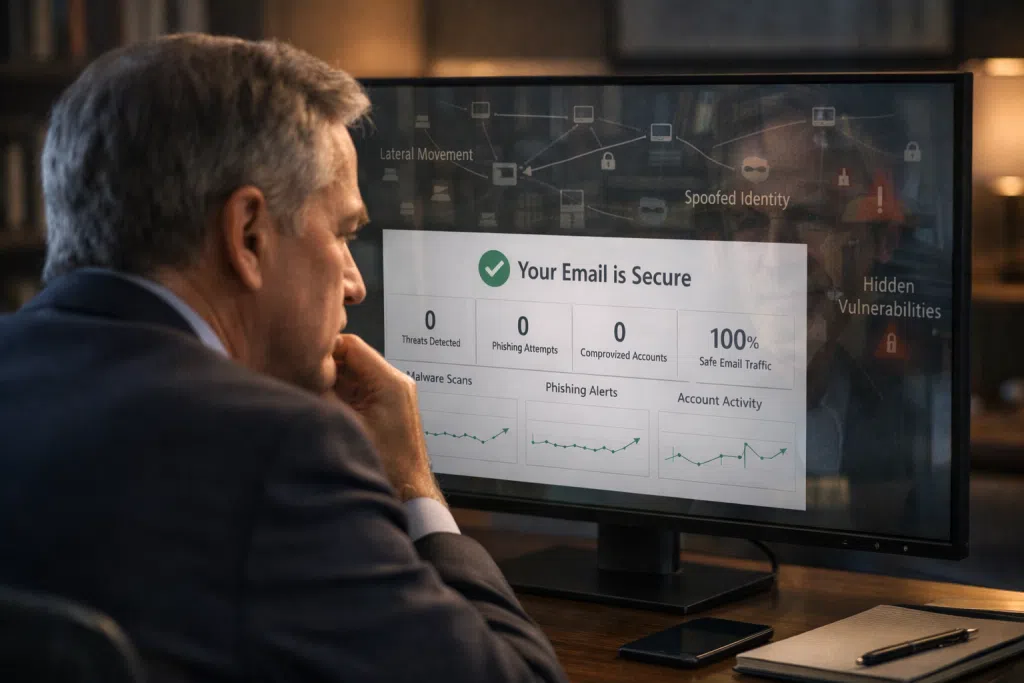
Rethinking How You Evaluate Email Security Services for Modern Threats
Business leaders and IT professionals often assume that their current email security services are robust enough to handle ever-evolving threats. After all, email security measures, like spam filtering or anti-phishing tools, may have thwarted attacks in the past. However, recent headlines and alarming case studies suggest that cybercriminals are not only adapting but outpacing many “set-and-forget” solutions. As organizations across New Jersey and beyond depend heavily on digital communication, the stakes for email protection services could not be higher. Ransomware, spear-phishing, and business email compromise (BEC) are more common than ever, making comprehensive email security a necessity for every modern business, regardless of size.
Consider the facts: According to the 2026 Verizon Data Breach Investigations Report, over 90% of cyberattacks on businesses began with a malicious email. Even large organizations with advanced infrastructure have faced record losses stemming from overlooked vulnerabilities in their email security gateway or cloud email security deployments. That’s because many security breaches are enabled not just by external hacking but by lapses in internal controls, employee awareness, and a lack of advanced features like AI-driven threat detection.
Secure email isn’t just about keeping obvious spam at bay. True business email security demands a layered approach, one that goes beyond the basics and evolves in tandem with attackers. Are your current email security solutions keeping up with zero-day threats, targeted impersonation attempts, and compliance requirements? Have you evaluated whether your cloud email security matches your risk profile and business objectives?
To understand where your own defenses stand, it is essential to look past vendor checklists and marketing claims. Strong email protection services today should involve proactive defense, active monitoring, policy enforcement, incident response readiness, and regular assessment. Anything less could leave critical data and your organization’s reputation exposed.
Connect with Blueclone Networks now if you want to assess or upgrade your business email security posture.
Why Many Email Security Solutions Fall Short Against Sophisticated Attacks
Traditional email security services have come a long way from the days of simple spam filters and blacklists. Yet, today’s attackers leverage advanced social engineering tactics, exploit trusted relationships, and use custom payloads that bypass static defenses. For instance, business email compromise, a scam in which attackers impersonate company executives or partners to trick employees into transferring funds or divulging sensitive information, cost global businesses billions of dollars last year, as reported by the FBI’s 2026 Internet Crime Report.
One crucial limitation of legacy email protection services: static rulesets cannot identify context-aware or highly personalized attack patterns. For example, a standard spam filter might block unsolicited marketing emails, but it may not flag a message that replicates internal workflows or includes urgent requests mimicking real executives. Cybercriminals now design emails that are indistinguishable from legitimate conversations, sometimes even using AI-generated language, correct logos, and complex thread hijacks.
Another underappreciated risk comes from evolving malware delivery. Unlike the generic viruses of a decade ago, many payloads now use sophisticated obfuscation techniques or take advantage of legitimate cloud services for hosting. Attackers frequently disguise links with trusted domain shorteners or hide malware in seemingly benign attachments like PDFs or Excel files with embedded macros.
Cloud email security tools, such as those integrated with Microsoft 365 or Google Workspace, bring their own challenges. Native security features may not address risks outside of their platform, and they often lack advanced analytics or continuous threat intelligence updates. Worse, organizations that migrate to cloud email platforms sometimes mistakenly believe that default security settings are sufficient, only to discover that targeted attacks still succeed through overlooked gaps.
To defend against this wide spectrum of threats, email security gateway solutions must integrate real-time threat intelligence, scan for impersonation attempts, filter URL and attachment risks, and monitor outbound traffic for suspicious behavior. In addition, advanced filtering needs to be paired with comprehensive policies and user training. Only a holistic approach closes the gap between traditional and modern threats.
Many organizations in regulated sectors, including healthcare and legal practices, face additional challenges as they must ensure their secure email platforms meet compliance mandates such as HIPAA or PCI-DSS. Even a single exposed email can trigger audits, legal action, or reputational damage. This reality underscores the need for layered, policy-driven controls, audit logging, and frequent reviews of security posture.
A thorough evaluation of your business email security setup should start with the question: Are we equipped for the current and next generation of cyber threats? Partnering with experienced email security advisors ensures your organization doesn’t just react but stays a step ahead.
Essential Features Every Modern Email Protection Service Must Offer
In the past, organizations viewed email security as a transactional need, something solved with a closed-source appliance or a boxed software license. The modern cyber landscape demands more than “good enough” filtering or piecemeal tools. Comprehensive email protection services incorporate multiple layers of intelligence, automation, user education, and policy enforcement.
Let’s break down what a best-in-class email security service should provide:
1. Multi-Vector Threat Detection
Malicious actors use various tactics, including phishing campaigns, zero-day malware, link hijacking, social engineering, and account compromise. A robust platform must analyze not only the content and metadata of incoming (and outgoing) messages but also attachments, embedded links, and sender reputation, all in real time. This approach includes scanning for language patterns typical in spear-phishing or payment diversion scams.
2. Artificial Intelligence and Machine Learning
Human analysts alone cannot keep up with the scale and speed of modern attacks. Advanced vendors incorporate AI-driven anomaly detection to identify previously unseen threats, flag suspicious patterns, and adapt filtering in real time. As detailed by Microsoft’s 2026 Digital Defense Report, AI-driven security has become essential in catching nuanced attacks that elude signature-based detection systems.
3. Outbound Email Monitoring
It’s not just what comes in – the risks include what leaves your business. Outbound scanning prevents sensitive data loss, unintentional misdelivery, and malware propagation. It’s particularly vital in regulated industries, where improper transmission of personal or confidential information can trigger compliance issues or fines.
4. Security Awareness and Phishing Simulation
A tool is only as resilient as its users. Effective email security services now include ongoing employee training and simulated phishing campaigns, helping employees recognize suspicious messages and avoid risky behavior. Regular education shrinks the attack surface by making every team member aware of tactics used in social engineering attacks.
5. Decision-Grade Reporting and Compliance Logging
Organizations need clear insight into their risk posture and must meet regulatory requirements. Email protection services should offer detailed analytics dashboards, policy violation reporting, and compliance logs. These features enable IT staff to monitor trends, quickly identify incidents, and streamline audits for standards such as HIPAA, FINRA, or PCI-DSS.
6. Integration with Cloud Email Security Platforms
Most businesses now rely on cloud-based email systems. Look for providers who offer seamless integration with Microsoft 365, Google Workspace, or other SaaS platforms to avoid coverage gaps. The right solution should support advanced threat protection, multifactor authentication checks, and granular policy settings tailored to each user group.
7. Encrypted and Secure Email Delivery
With remote work and mobile access ubiquitous, secure email solutions must support full end-to-end encryption, on-demand secure messaging, and Data Loss Prevention (DLP) policies. The goal: ensure that sensitive data in transit and at rest is protected from unauthorized access.
8. Incident Response and Quarantine Capabilities
Even with all precautions, some threats may slip through. Providers should deliver incident response tools to isolate suspicious messages, roll back account changes, and guide remediation efforts swiftly.
The right provider brings all these elements together as part of an ongoing partnership, not a one-off deployment. Tech support, regular service reviews, and proactive notifications ensure your defenses remain strong as threats evolve.
Midway through evaluating your options? Don’t settle for surface-level protection. Connect with Blueclone Networks now to discuss modern email security solutions tailored to your business.
Assessing Weaknesses: Email Security Gaps Businesses Commonly Overlook
Most decision-makers trust that purchasing an email security gateway ensures complete protection. But beneath that confidence lie several hidden gaps that criminals target, often with success. Understanding these vulnerabilities helps leaders and IT staff take a proactive stance.
Over-Reliance on Default Configurations
Many organizations depend on the out-of-the-box security settings in their cloud email platforms and assume these defaults are configured for their unique risk profile. In reality, generic setups often lack granular DLP rules, complex password policies, or advanced attachment scanning. Attackers exploit these gaps, particularly as vendors roll out new features that might be left unconfigured.
Lack of Continuous Threat Intelligence
Cybercrime evolves quickly. If your email protection service isn’t fed with the latest threat intelligence, such as newly discovered malware hashes, phishing domains, or impersonation techniques, it quickly becomes outdated. Attackers constantly rotate tactics, taking advantage of the lag in detection updates.
Gaps in Multi-Factor Authentication (MFA)
Sophisticated attackers routinely target business email accounts through phishing or brute-force, seeking to bypass simple username-password combinations. A surprising number of organizations do not enforce MFA for all users, particularly on cloud email systems accessed from remote locations or personal devices.
Insufficient User Training
Technology can only do so much if employees do not recognize suspicious emails or understand best practices for secure email handling. Poor awareness opens the door to credential harvesting, social engineering, and business email compromise, even with top-of-the-line technical layers.
Weak Outbound Filtering
Most organizations focus on inbound malicious content, overlooking the risks posed by outgoing messages. Data leakage, intentional or accidental, can expose proprietary information, trigger lawsuits, or violate regulatory guidelines.
Absence of Incident Response Planning
Even the best email security services cannot guarantee 100% protection. Many businesses lack a documented incident response plan outlining how to contain breaches, notify stakeholders, and recover from an attack. Without rehearsed plans, even minor incidents can spiral out of control.
Limitations in Legacy Email Security Gateway Products
Older, on-premises gateways may have difficulty integrating with newer SaaS tools or providing unified coverage across mobile, web clients, and hybrid infrastructure. These legacy systems sometimes lack adaptive threat detection or struggle to scale with changing business needs.
Unaddressed Third-Party Risks
Modern organizations work with a wide array of vendors, contractors, and supply chain partners. Attackers frequently exploit weak security in third-party emails to pivot into target environments, often without triggering internal alarms.
A thorough risk assessment, leveraging both technical and human controls, is essential for identifying and addressing these gaps. According to a 2026 report by the Cybersecurity & Infrastructure Security Agency (CISA), proactive reviews and ongoing adjustments to business email security protocols reduce incident rates by over 50%. Comprehensive protections take diligence, regular updates, and engagement at every level of the organization.
The Role of Cloud Email Security and Secure Email Gateways in a Hybrid Workplace
The rise of cloud-based email and the shift to hybrid work have fundamentally altered how organizations approach email security. While cloud platforms like Microsoft 365 and Google Workspace offer flexibility and scalability, they also introduce new risks and complexities, especially when users access email from multiple devices and locations.
Cloud email security platforms are designed to provide seamless coverage regardless of where email is accessed. These solutions offer real-time threat blocking, sandboxing of suspicious attachments, and integration with broader identity and access management tools. Yet, not all cloud solutions are created equal. Some only deliver basic spam filtering, while others invest in behavioral analytics, advanced link protection, and real-time policy enforcement.
A secure email gateway acts as a front-line shield, inspecting every message before it reaches end users. It can apply multifactor checks, scan for spoofed domains, and enforce message encryption or quarantine policies as needed. In a hybrid workplace where employees may use personal devices or unsecured networks, this control point is vital for catching threats that slip past user vigilance.
Key considerations for any organization relying on cloud email security include:
- Comprehensive Coverage: Does the solution scan both inbound and outbound messages, including internal traffic between users?
- Seamless Integration: Can it work alongside existing antivirus, endpoint security, and identity providers without causing conflicts or coverage holes?
- Scalability: Is the platform capable of supporting rapid growth, mergers, or the addition of remote workers?
- Automated Remediation: Does the system take automatic action, such as quarantining or blocking risky emails, or does it require manual intervention?
- Regulatory Compliance: Does the solution log, archive, and encrypt data in accordance with industry standards like HIPAA, PCI-DSS, or FINRA?
A case in point: A mid-sized healthcare group in Central New Jersey faced several attempted phishing attacks targeting remote staff. By upgrading from default cloud email security to a dedicated secure email gateway with AI-driven analytics, they were able to stop dozens of advanced attempts before any data was put at risk. These measures also supported their compliance audits and gave leadership peace of mind.
For business leaders and IT managers, the bottom line is clear: the complexity of remote work and cloud services demands a fresh look at how secure email is implemented and managed.
Building a Resilient Email Security Strategy: Best Practices for 2026 and Beyond
Organizations that treat email security services as a one-time investment risk falling behind. Instead, a sustainable approach requires ongoing evaluation, adjustment, and team engagement. Here’s what leading organizations across New Jersey and the broader region are doing to build lasting resilience:
1. Conduct Regular Security Assessments
Annually, or more frequently as threats evolve, review your entire email security environment. Assess for new risks brought by cloud migrations, device diversity, and evolving compliance standards. Simulate real-world scenarios to expose hidden vulnerabilities.
2. Enforce Company-Wide Multi-Factor Authentication
Assume that some credentials will leak. MFA for all email accounts creates a strong second line of defense, reducing the risk of breach from password theft or phishing.
3. Keep Employee Training Fresh
Deliver ongoing security awareness programs with up-to-date examples and phishing simulations. Make cybersecurity part of the workplace culture by rewarding vigilance and reporting.
4. Partner with Proactive Providers
Choose vendors and managed security partners who don’t just install tools but also provide regular updates, threat briefings, and responsive support. The best providers operate as an extension of your team, ready to triage and remediate incidents.
5. Establish a Documented Incident Response Plan
Create, test, and review an action plan for suspected breaches or suspicious activity. Know who is responsible at each step, how to escalate issues, and what steps are needed for notification, containment, and recovery.
6. Prioritize Integration and Automation
Select email security services that integrate cleanly with your broader cybersecurity stack, whether that’s firewalls, identity management, or endpoint detection tools. Automation (such as auto-quarantine or threat intelligence updates) keeps defenses current without burdening IT.
7. Maintain Compliance Posture
Document all controls, archiving, and monitoring you put in place for secure email. Regularly audit to ensure ongoing alignment with regulatory standards specific to your industry.
8. Monitor the Threat Landscape
Stay connected to real-time threat intelligence feeds, vendor bulletins, and cybersecurity advisories such as those published by CISA or global industry groups. Anticipating new threats helps you respond quickly and effectively.
Data from InfoSec Institute’s 2026 State of Email Security survey highlighted that businesses actively combining these best practices reported 75% fewer successful email attacks compared to those relying solely on default or legacy tools. The goal is to create an environment where mistakes can be caught quickly and attackers are met with layers of defense rather than open doors.
Connect with Blueclone Networks now to transform your approach to email protection and stay ahead of the most sophisticated threats.
Frequently Asked Questions About Email Security Services
Email security services combat several critical threats, including phishing attacks, business email compromise (BEC), malware and ransomware delivery, spam, and data loss from negligent or malicious insiders. As attackers use increasingly sophisticated tactics, such as social engineering, credential theft, and impersonation, comprehensive defenses are necessary.
Secure email gateways act as gatekeepers for email traffic, scanning and filtering messages before they reach intended recipients. They can be hardware-based, virtual, or cloud-delivered. Cloud email security, by contrast, is typically integrated natively into cloud platforms like Microsoft 365 or Google Workspace but may offer fewer advanced controls. Combining both approaches can provide layered protection.
Yes, because many successful attacks target human behaviors, like clicking on a convincing phishing link or entering credentials into a fake login page. Training employees to spot threats, practice safe habits, and report suspicious activity remains vital even when advanced technical layers are present.
Email security services form a critical component of compliance efforts by enabling encrypted communication, advanced auditing, and strict policy enforcement. However, compliance also demands regular reviews, proper data retention, and secure user practices in addition to technical controls.
Seek a provider offering comprehensive threat detection (including AI and real-time intelligence), seamless integration with existing cloud platforms, clear reporting, strong support, and proactive partnership. Consider the provider’s experience with businesses like yours and look for evidence of ongoing commitment to innovation and regulatory alignment.