






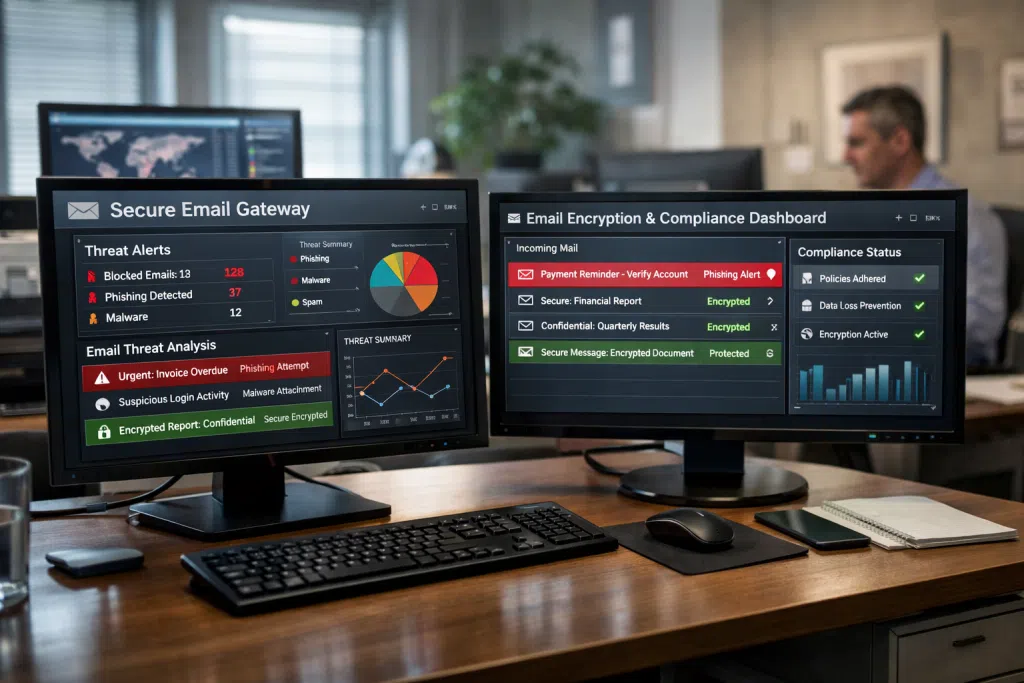
Email remains the backbone of communication for businesses in healthcare, finance, legal, and pharmaceutical sectors across New Jersey. As digital transformation accelerates, email security is no longer just a concern for IT managers; it’s a front-line defense against threats that can result in data exposure, financial losses, and reputational harm, particularly for small and mid-sized organizations under strict compliance mandates. Understanding real risks, optimizing your secure email defenses, and selecting robust email security services are critical steps every modern SMB must prioritize.
Email security best practice is essential not only for protecting confidential information but also for maintaining regulatory compliance and continuity of business operations. This article explores proven strategies, the most relevant gateway tools, and industry examples to help your business stay ahead of evolving threats. Connect with Blueclone Networks now to strengthen your email security posture.
The True Cost of Compromised Email Security: Threats Facing New Jersey SMBs
No organization, regardless of size, is exempt from email-based risks, and for SMBs in regulated industries, the stakes are especially high. Cybercriminals are increasingly sophisticated, targeting both individuals and organizations with tactics ranging from simple phishing attempts to well-planned business email compromise (BEC) schemes. According to the FBI Internet Crime Report, BEC alone accounted for nearly $2.7 billion in reported losses nationwide in 2023, with New Jersey ranking among the most heavily targeted states due to its high concentration of professional service firms and healthcare providers.
Phishing: The Most Common Email Security Threat
Phishing remains the most pervasive and damaging email threat. Attackers use convincing fake messages to steal credentials, trick victims into exposing sensitive data, or deploy malware. These emails can be highly targeted (spear-phishing) or sent in bulk, but their effectiveness comes from convincing employees to click on malicious links or download harmful attachments.
For instance, a New Jersey-based law firm recently discovered that an employee had unknowingly provided their credentials in response to what looked like a standard document review request. Within hours, the attackers gained access to confidential client files and attempted to reroute funds from pending settlements, a disaster that could have been prevented with better email security solutions and employee awareness programs.
Ransomware and Malware Distribution
In addition to phishing, ransomware attacks propagated via malicious email attachments or embedded links remain a persistent threat. Small healthcare providers and prescription services in Central NJ have become prime targets due to the high value of protected health information (PHI) and the likelihood that an organization will pay to recover vital records quickly. In 2026, several healthcare practices in the state experienced email-borne ransomware outbreaks, resulting in weeks of downtime and costly regulatory reporting.
Compliance Failures and Data Breaches
Regulated sectors face additional email security challenges: compliance requirements. HIPAA, PCI-DSS, and FINRA regulations demand not only the protection of sensitive data, but also detailed incident reporting and evidence of proactive measures. Lack of a modern email security gateway, improper encryption of emails containing protected information, or simple misdelivery of messages can all constitute major compliance violations.
A pharmaceutical company in Princeton, for example, faced substantial fines after misdirecting emails with proprietary drug research data to an unsecured external address. The incident highlighted the importance of secure email delivery, data loss prevention (DLP), and ongoing audit trails.
Email Account Hijacking and Internal Threats
Credential theft through phishing or credential stuffing enables attackers to take over business email accounts. Once inside, they can impersonate staff members, request fraudulent payments, or gain access to restricted systems. These “internal” email threats are particularly dangerous when attackers exploit legitimate users’ accounts, making detection much more difficult.
Given these multi-layered risks, SMBs in New Jersey’s regulated sectors cannot afford to view email security as an optional add-on; it must be a core part of their cybersecurity strategy and compliance posture. For tailored solutions and expert advice, Connect with Blueclone Networks now.
Building Blocks of Modern Email Security: What Every SMB Needs
As email-based threats have evolved, so have the tools and strategies required to defend against them. A strong email security program leverages several layers of protection, combining people, processes, and technology. Here’s what every New Jersey SMB in healthcare, finance, legal, and pharmaceuticals should consider:
Multi-Layered Email Security Solutions
A best practice for effective email security is the “defense-in-depth” approach: deploying multiple tools and controls at different points in the email ecosystem.
- Email Security Gateway: This is a frontline filter that blocks spam, phishing messages, malware, and suspicious attachments before they reach end users’ inboxes. Leading gateways offer advanced threat intelligence, URL and attachment scanning, and policy-based controls.
- Secure Email Encryption: Protecting confidential and regulated information in transit is essential. Encryption tools ensure sensitive data cannot be read by anyone except the intended recipient, supporting HIPAA, HITECH, and GDPR compliance requirements.
- Data Loss Prevention (DLP): Restricting outgoing emails that contain keywords, attached files, or types of content classified as sensitive (e.g., PHI or financial records) helps prevent accidental or deliberate data leaks.
- Impersonation and Account Compromise Protection: Modern email security services use artificial intelligence and behavior analysis to flag unusual login locations, display name spoofing, or unauthorized forwarding rules.
- AI-Powered Threat Detection: The integration of machine learning allows platforms to adapt to new attack patterns, recognize unusual behaviors, and automatically quarantine suspicious communications. Especially for organizations pursuing AI integration, leveraging AI-powered security options dramatically improves response times and detection accuracy.
Employee Education and Process Controls
Technology is only part of the answer. Consistent, engaging employee training on how to recognize sophisticated phishing emails, confirm requests for sensitive data, and practice safe email habits remains a critical layer. Simulated phishing campaigns and regular policy reviews keep staff alert and informed.
Access controls, such as requiring multi-factor authentication (MFA) for email system access, restricting email forwarding, and monitoring unusual behavior, add further protection against both external and insider risks.
Proactive Monitoring, Logging, and Incident Response
Detection is only as valuable as your organization’s ability to act. Continuous monitoring of email system activity, automated alerts, and regular security audits are important for timely response to incidents. A clear incident response plan ensures that, in case of compromise, teams know how to isolate affected systems, contact key stakeholders, and complete regulatory reporting quickly.
Integration with Broader Cybersecurity and Compliance Efforts
Email security cannot stand alone; it should be an integrated part of broader cybersecurity efforts. For SMBs that rely on cloud productivity suites such as Microsoft 365 or Google Workspace, advanced email filtering, cloud DLP policies, secure backup, and seamless integration with other security tools improve outcomes and reduce complexity.
Companies in regulated sectors must maintain audit-ready logs for all email activity, implement risk assessments as required by frameworks like HIPAA and PCI-DSS, and continually review their email security controls for gaps. Leading email security services provide centralized dashboards, on-demand compliance reports, and support for audit trails.
Local Expertise: Why New Jersey SMBs Need Specialized Email Security
Given that New Jersey and the surrounding NYC metro area have highly concentrated financial, legal, and healthcare organizations, the threat landscape is more aggressive and compliance requirements are more complex than average. Working with an email security provider who understands regional regulations and sector-specific needs is key to staying protected.
For example, Blueclone Networks’ team is experienced with area-specific regulatory frameworks, local cyber threat patterns, and the expectations of New Jersey auditors and clients. This local knowledge, combined with global best practices, gives SMBs the assurance that their secure email defenses are well matched to real risks.
Connect with Blueclone Networks now to review your organization’s email security needs.
Choosing the Right Email Security Gateway and Services
Installing an email security gateway is one of the most strategic steps an SMB can take to block spam, targeted phishing, malware, and other harmful content at the earliest possible point. But not all solutions are created equal, and regulated industries require more than basic filtering.
Key Features Every SMB Should Demand
- Advanced Threat Protection: The top gateways offer real-time threat intelligence, scanning every message for known and emerging attack indicators. Features like sandboxing analyze attachments, and URLs in a secure environment before delivering them to recipients.
- Customizable Filtering: Robust rule engines allow organizations to block or quarantine messages by source, content, file type, or behavioral patterns. For law firms or financial service companies, this level of control helps tailor security to industry threats.
- Anti-Phishing and Spear-Phishing Controls: Reputation analysis, domain and display name matching, and machine learning-based detection of impersonation techniques protect users from both generic and highly targeted campaigns.
- Secure Email Delivery: Encryption options should be simple for users to access but strong enough to meet regulatory standards. Features such as secure message portals and automated encryption triggers support privacy and compliance.
- Integration and Reporting: Seamless integration with Microsoft 365, Google Workspace, or other cloud suites ensures unified protection, while detailed dashboards provide admins with visibility into blocked threats, user behaviors, and compliance status.
- Support for Regulatory Compliance: The gateway must support specific needs such as legal hold, e-discovery, and DLP to satisfy HIPAA, PCI-DSS, or FINRA auditing requirements. Automated policy enforcement and accessible audit trails are essential.
Cloud-Based vs. On-Premises Solutions
With many SMBs moving communication and collaboration platforms to the cloud, cloud-based email security gateways are gaining in popularity. These solutions offer rapid deployment, updates direct from the vendor, and easy scalability, a major benefit for firms with remote or hybrid workforces.
On-premises appliances still have relevance in environments with legacy infrastructure or highly sensitive workflows, but these are less common as secure cloud solutions have matured.
Testing and Selecting a Provider: What to Look For
- Track Record and Industry Experience: Has the provider worked with similar organizations? Do they have proven expertise with the compliance standards relevant to your business?
- Support and Responsiveness: Can you reach support teams 24/7 if a security incident occurs? Is there access to local expertise and knowledge of New Jersey regulations?
- Customization and Management: Does the service allow your IT team or IT partner to customize policies, run reports, and update configurations without hassle? Will it work alongside existing cyber programs?
- Integration with AI Tools and Automation: For SMBs looking to the future, does the solution integrate with AI-driven analytics to improve accuracy and reduce false positives?
A New Jersey Example: Gateways in Healthcare
A regional medical practice recently implemented an advanced cloud-based email security gateway after a sustained phishing campaign attempted to gain access to protected patient data. The platform’s real-time scanning, automated encryption, and DLP controls stopped several high-risk emails before they reached doctors’ inboxes. Ongoing managed services and monthly compliance reports met the requirements of state and federal auditors, and, critically, restored patient and staff trust.
Making the right choice in email security services directly impacts your operational continuity, compliance standing, and business reputation. To discuss the best gateway and service options for your practice or firm, Book a consult with Blueclone Networks today.
Email Security Solutions for Regulated SMBs: Compliance Requirements and Best Practices
Meeting regulatory expectations for secure email communication is non-negotiable for healthcare, finance, legal, and pharmaceutical organizations. Email systems not only need to block cyber threats but also ensure that communications remain confidential, traceable, and audit-ready.
Sector-Specific Compliance Challenges
Healthcare (HIPAA/HITECH): Protected health information (PHI) must only be transmitted via secure email. All access and sending of PHI must be logged. Any breach involving PHI requires timely regulatory and patient notification. Encryption, DLP, and strict authentication controls are mandatory.
Finance (GLBA, PCI-DSS, FINRA): Financial data like credit card numbers or transaction records must be protected both in transit and at rest. Email security services should provide e-discovery, archiving, encrypted communications, and automated policy enforcement.
Legal (ABA Guidelines, Client Confidentiality): Law firms are obliged to protect client communications from unauthorized disclosure. Features like message encryption, secure portals, and detailed delivery logs are non-negotiable.
Pharmaceutical (FDA, trade secrets): Proprietary research and FDA-submitted documents need strict controls, including email DLP, role-based access, and comprehensive audit trails.
Auditing and Policy Enforcement
Email security isn’t only about technology, policies must also be reviewed and enforced. Regularly auditing who can send what information, monitoring for risky behavior, and running regular risk assessments are essential practices.
For SMBs with limited IT resources, managed email security services provide both technology and expertise. According to a 2026 CSO Online study, 62% of SMBs reported they rely on outsourced services for core aspects of email protection and compliance management.
Backups and Business Continuity
Even with world-class security, no defense is perfect. Scheduled backups of email data, regular testing of restore processes, and integration with wider disaster recovery plans help ensure critical communications can be recovered quickly in the event of a ransomware attack or accidental deletion.
Continuous Improvement and Vendor Collaboration
Threats change daily, and compliance frameworks update frequently. By working with a provider committed to proactive improvement, one who offers regular updates, staff training, and stays up to date with the New Jersey threat landscape, your organization stays ahead of both criminals and regulators.
For a compliance review or to implement industry-specific secure email practices, connect with Blueclone Networks now.
Integrating Email Security with Broader IT and AI Strategies
For many SMBs, email security can become siloed from broader IT and business goals. However, integrating your secure email systems with a wider cybersecurity program and exploring AI-powered enhancements unlocks greater value and future-readiness.
Email Security and AI: Smarter, Faster, More Precise
Modern email security gateways increasingly leverage artificial intelligence to analyze message content and user behavior in real time. This adaptation not only blocks new phishing attacks that evade static rules but also detects subtle signs of business email intrusion or insider threats. AI-enhanced email security solutions identify and quarantine emerging threats more quickly, helping minimize the risk window and reduce manual workload for IT staff.
For regulated SMBs exploring cloud-based collaboration, integrating email security with cloud data loss prevention, secure chat, document management, and endpoint protection creates a more unified, easier-to-manage ecosystem. This integration delivers faster incident response, more comprehensive compliance, and improved business efficiency.
Prioritizing People and Processes
While AI and technical controls are powerful, they work best when combined with human-centered processes. Ongoing employee training, phishing simulation exercises, and clear email use policies remain vital to reducing risky behaviors. In partnership with an expert provider, SMBs can create a culture where everyone understands their role in defending sensitive data.
Seamless Cloud Integration for the Modern Workforce
Most New Jersey SMBs use Microsoft 365, Google Workspace, or similar cloud email platforms. Email security services must integrate natively with these ecosystems, enforcing the same high-security standards for both in-office and remote users. Features like mobile device management, secure file sharing, and integration with digital workflow tools support today’s flexible work models.
Measuring Success and Return on Investment
The value of email security becomes clear when measured against potential loss. Preventing a single breach or compliance failure can pay for years of advanced protection. Businesses should monitor metrics like threat detection rates, time to quarantine, policy violations, training participation, and audit outcomes to gauge effectiveness.
Partnering with a locally-focused provider ensures metrics are aligned not only with global best practices, but also with the unique challenges facing New Jersey’s regulated industries. For a strategy checkup or customized solution assessment, connect with Blueclone Networks now.
Frequently Asked Questions: Email Security for SMBs in Regulated Sectors
An email security gateway is a filtering system that scans inbound and outbound email traffic for spam, malware, phishing content, and impersonation attempts. For SMBs in regulated industries, it acts as a barrier that helps stop threats before they reach users and ensures that outgoing emails meet policy and compliance requirements.
SMBs in healthcare and finance can ensure regulatory compliance by implementing email encryption, data loss prevention controls, strong authentication (like MFA), regular employee training, and comprehensive logging/audit trails. Partnering with a provider familiar with industry standards is highly recommended.
Essential features include advanced threat intelligence, phishing protection, DLP, secure encryption, customizable filters, policy enforcement tools, user behavior analytics, compliance reporting, and integration with productivity platforms (e.g., Microsoft 365). Local industry experience and responsive support are also valuable.
Threats, technologies, and regulations evolve quickly. SMBs should review their email security systems and policies at least annually, or after any major organizational or regulatory change. Periodic penetration testing and simulated phishing drills also help ensure ongoing effectiveness.
Even the most advanced security tools cannot prevent all human error. Employees who recognize red flags, suspicious messages, spoofed senders, and urgent requests for sensitive data are the last line of defense. Regular training and testing help keep security awareness high and reduce risky behaviors.