






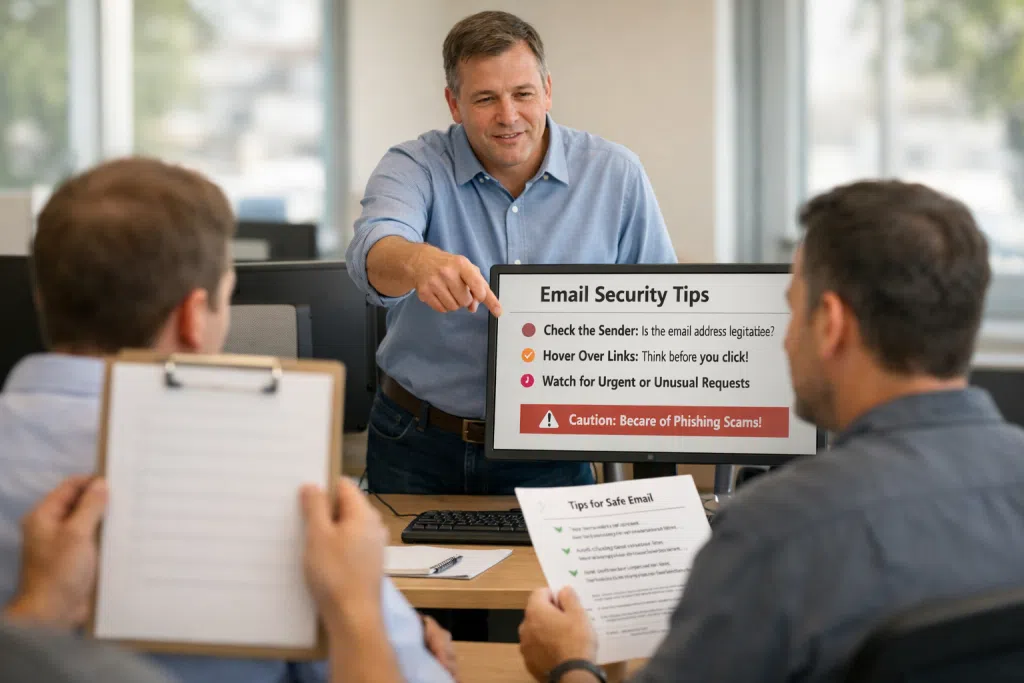
Email remains a foundational communication tool for organizations of every size, yet, for regulated industries like healthcare, finance, law, and pharmaceuticals across New Jersey, Pennsylvania, and beyond, the risks of neglecting email security best practices are more alarming than ever. Threats evolve continuously, from ransomware to phishing and sophisticated social engineering scams. Business leaders often assume that a generic spam filter or simple password protocol is sufficient. However, today’s attackers are relentless and well-funded, often exploiting small lapses in policy or training to breach even the most conscientious organizations.
Growing businesses in regulated sectors, including many in Central New Jersey’s healthcare, legal, and financial communities, face heightened compliance pressures and reputational stakes. A single email breach can trigger regulatory penalties, financial loss, and irrevocable trust damage. The strong foundation of any effective cybersecurity posture starts with the basics, sensible, actionable email security best practices. This article delves deeply into how organizations can shield themselves from inbox attacks, with insight grounded in recent trends, real-world examples, and the nuanced requirements of SMBs operating in highly regulated sectors.
With years of experience supporting companies in compliance-driven environments, Blueclone Networks has seen firsthand how simple missteps in email security policy can escalate into major incidents. Whether your firm manages patient records, sensitive financial assets, or confidential legal communications, it’s time to consider if you’re overlooking the basics that could protect your business from costly security events.
Connect with Blueclone Networks now to review your organization’s approach and adopt modern Email Security Best Practices before it’s too late.
Recognizing the Real Risks: Why Email Security Matters More Than Ever
Understanding why email security best practices must be a business priority starts with a clear-eyed look at today’s inbox threats. Phishing has grown dramatically more complex, leveraging deepfake audio or video, AI-powered spear phishing, and business email compromise (BEC), in which attackers impersonate executives or vendors to deceive staff. The FBI’s 2023 Internet Crime Report highlights that BEC scams alone resulted in reported losses exceeding $2.4 billion nationwide in 2022, with SMBs making up a disproportionate number of victims.
In healthcare, HIPAA fines skyrocketed after breaches often traceable to errant emails. Financial and legal clients face routine regulatory audits, and any slip can result in severe sanctions. For instance, a New Jersey medical practice recently paid hundreds of thousands in penalties after an exposed email account leaked protected health information (PHI). In a separate incident, an East Coast law firm’s inadvertent click on a phishing email led to confidential client files being sold on the dark web.
These stories repeat so often because too many organizations either lack a comprehensive email security policy or treat security as a one-time IT project rather than an ongoing process. Unfortunately, sophisticated attackers don’t just target large corporations; small and midsize businesses are now prime targets because of perceived weaker defenses.
Cybercriminals rely on social engineering and technical exploits. They may send tailored phishing messages that mimic supplier invoices or exploit credentials obtained from previous breaches to launch convincing attacks. Others inject malware that can escalate from an infected workstation to your entire network, threatening business continuity and triggering costly notifications under regulations such as HIPAA and FINRA.
Email remains the primary attack vector for ransomware and credential theft, with threat actors constantly refining their tactics to bypass filters or exploit outdated authentication practices. Technology alone will not stop these threats. Human factors, awareness, vigilance, and smart processes are equally important. Smart firms harmonize secure email hosting, regular email security training, layered technical controls, and strict email security policies to combat evolving risks.
Many regulated SMBs in New Jersey might still depend on consumer-grade email solutions, assuming standard spam filtering and basic password requirements offer sufficient protection. Unfortunately, these setups lack crucial features like advanced threat protection, email encryption, real-time anomaly detection, and compliance-ready logging. According to Verizon’s 2026 Data Breach Investigations Report, over 80% of breaches involved a human element, frequently starting with a phishing campaign aimed at harvesting credentials through email manipulation.
With so much at stake, your organization cannot afford to ignore the basics of business email security or rely on outdated solutions. Proactive defenses, designed to anticipate and neutralize new techniques, can spare your team from disruption and preserve your reputation in an interconnected business environment.
Take action today: Connect with Blueclone Networks for personalized guidance on strengthening your defenses against the latest email threats.
Foundations of an Effective Email Security Policy for Regulated Businesses
A robust email security policy lies at the heart of any business’s digital risk management, especially for those operating within healthcare, finance, legal, and pharmaceutical sectors, where compliance is non-negotiable. Sophisticated security infrastructure loses much of its effectiveness if employees, contractors, or even leadership do not consistently adhere to clear, enforceable rules.
Defining Roles, Responsibilities, and Expectations
An effective email security policy starts by identifying who in the organization is responsible for various security tasks. This ranges from IT administrators who configure technical controls to legal and compliance personnel ensuring that policies align with HIPAA, HITECH, FINRA, or PCI-DSS requirements. Policy clauses should specify which types of information (such as PHI, client data, or financial records) may be transmitted via email, when encryption is mandatory, and explicit escalation procedures for suspected security incidents.
For instance, law firms may prohibit paralegals from emailing confidential legal documents to personal accounts, while healthcare practices must ensure all outgoing emails containing PHI are encrypted. Accountants managing sensitive financial records should be barred from opening unsolicited attachments, a vector commonly used for ransomware droppers.
Essential Components of a Comprehensive Email Security Policy
Account Management and Authentication
- Require multi-factor authentication (MFA) for all business email accounts, especially administrators or anyone forwarding sensitive messages.
- Implement strict password complexity requirements.
- Enforce regular password changes and immediately revoke access for departing users.
- Document procedures for managing shared inboxes or group accounts.
Acceptable Use and Access Controls
- Define acceptable and prohibited email activities; for example, banning automatic forwarding to external accounts.
- Specify controls for accessing email on mobile devices, requiring secure apps or encrypted connections.
- Limit access to email archives only to staff with a clear business need.
Data Protection and Transmission
- Mandate the use of secure email solutions or encryption for all sensitive data.
- Train staff to identify confidential or restricted information and verify recipients before sending.
- Set up automatic disclaimers reminding senders not to transmit regulated data without proper safeguards.
Incident Response and Reporting
- Outline immediate steps to take if a suspected phishing email is received, including who to notify and how to quarantine the message.
- Ensure every employee knows how to report a suspicious email or potential security incident.
- Document internal notification and legal/regulatory reporting protocols in the event of a confirmed breach.
Monitoring and Continuous Improvement
- Require regular evaluations of email protection solutions, adapting to new threat vectors.
- Conduct periodic policy reviews, incorporating lessons from recent incidents or regulatory changes.
- Use technical controls (such as audit logging and anomaly detection) to support compliance with industry standards.
Policies should be written clearly, enforced consistently, and revisited as regulations or your business change. Effective communication, the bridge between technical controls and staff behaviors, can mean the difference between a thwarted attack and a costly breach.
Technical Defenses: Layered Email Security Solutions Every SMB Needs
Modern threat actors employ highly automated and adaptable attack methods. Organizations cannot rely solely on manual vigilance; robust technical defenses are pivotal to reduce risk and maintain regulatory compliance. Secure email hosting and multi-tier email protection solutions are the strongest technological backbones for business email security.
Email Security Gateways and Filtering
The first line of defense, a business-grade email security gateway, screens inbound and outbound messages for malware, spam, business email compromise, and spear phishing. Unlike basic consumer-level filters, advanced gateways deploy AI-powered scanning, deep analysis of attachments, and URL rewriting to neutralize malicious payloads before they reach end users.
A New Jersey accounting firm, partnering with Blueclone Networks, deployed an enhanced filtering solution after multiple clients reported spoofed invoices. The new filters instantly flagged phony messages based on behavioral anomalies and blocked them at the server level, dramatically reducing client risk exposure.
Multi-Factor Authentication (MFA) for Email Accounts
Password compromise remains a leading cause of business email compromise. Enabling MFA can prevent unauthorized access even if credentials are phished or leaked. For regulated businesses, using MFA is not just a best practice but often a compliance mandate. Require MFA for all email logins and administrative functions, ensuring that stolen passwords alone cannot deliver access to sensitive inboxes.
Email Encryption and Secure Transmission
Encrypting email content, especially messages containing PHI, financial data, or legal documents, ensures that sensitive information remains unintelligible to anyone intercepting it in transit. Modern secure email solutions simplify encryption, allowing users to flag messages as confidential with a single click. Such safeguards fulfill both regulatory requirements and client expectations regarding privacy.
Anomaly Detection and Automated Threat Response
The sophistication of modern attacks demands continuous monitoring. Tools leveraging behavioral analytics and machine learning can identify suspicious login patterns, unusual sending activity, or spikes in failed password attempts, triggering automated lockouts or administrative alerts.
Backup and Archival for Email Continuity
Strong backup systems protect against data loss from ransomware or accidental deletion. Every critical email should be securely backed up and easily retrievable, supporting both business continuity and compliance audits. Automated systems reduce human error, ensuring essential messages are never lost.
Integration of Secure Mobile Access and Cloud-Based Controls
With a workforce increasingly accessing email through mobile devices, controls must extend to every endpoint. Secure mobile access, enforced via Mobile Device Management (MDM) or conditional access policies, prevents unauthorized devices from synchronizing or forwarding confidential emails. This is crucial in hybrid and remote work environments.
According to Gartner’s 2026 guidance on email and collaboration security, organizations that implement a layered defense model, combining filtering, encryption, MFA, advanced monitoring, and secure archival, are 70% less likely to experience a successful email-based breach than those depending on filters alone.
A critical takeaway: Business email security is not static. Every component must evolve as attackers innovate. Collaborating with specialized providers who monitor emerging tactics and rapidly deploy updated protections ensures your firm remains a step ahead.
People: Training and Awareness as a Core Email Security Best Practice
No matter how advanced technical defenses become, human error remains the leading cause of business email security incidents. Employees are the last and often most critical line of defense against phishing, impersonation, and other email-based threats. Elevated security awareness, reinforced regularly, is a nonnegotiable element of sound risk management for SMBs in regulated industries.
Why Ongoing Email Security Training is Non-Negotiable
Employees at all levels receive sophisticated phishing attacks that may include urgent requests, realistic-looking invoices, or messages appearing to come from executives. Hackers often use social media to research company hierarchies, crafting messages that appear highly credible.
A New Jersey healthcare provider, for example, suffered a serious breach when a staff member clicked a link in a well-disguised phishing email, providing attackers a foothold into their sensitive systems. The incident led to the exposure of thousands of patient records and months of reputational repair.
Elements of an Effective Email Security Training Program
Phishing Simulation Exercises
- Regularly send simulated phishing emails to employees, tracking who clicks suspicious links or submits credentials.
- Use results to identify knowledge gaps and focus further training.
Clear Guidelines for Handling Sensitive Emails
- Teach staff how to verify requests for confidential information, especially those purporting to be from executives, partners, or regulators.
- Encourage the use of secondary communication channels or in-person confirmation before sharing regulated data.
Safe Attachment and Link Handling
- Train staff never to open attachments or click links from unverified sources or unexpected emails.
- Discourage the use of personal devices or accounts for business email activities.
Incident Reporting Protocols
- Make it easy for employees to report suspicious messages. Create a culture of “if you see something, say something” without fear of reprisal.
- Highlight past incidents (anonymized) as learning opportunities.
Continuous Education
- Cybersecurity threats mutate constantly; training must be ongoing, not annual. Incorporate news about new scams, regulatory changes, or tech updates into regular security briefings.
Leadership’s Role in a Security-First Culture
Leadership buy-in and visible support for security policies determine whether training becomes a check-the-box exercise or a deeply embedded value. Executives must participate in awareness programs alongside staff and reinforce the expectation of vigilance through communication and action. When business leaders treat email security with the seriousness it warrants, employees will follow suit.
Smaller organizations may not have their own internal trainers or IT security experts. Partnering with specialized vendors ensures every employee, attorney, nurse, accountant, or office manager receives relevant, practical guidance. Trained staff remain alert to suspicious emails, protecting client data, meeting compliance obligations, and preserving reputational trust.
Connect with Blueclone Networks now for expert-led Email Security Training customized for your staff’s unique email risks and regulatory needs.
Choosing Technologies and Policies: What to Look For in Secure Email Solutions
With a steadily growing array of email solutions and hosted platforms available, it’s easy to become overwhelmed by technical jargon and vendor claims. Yet, not all solutions offer the features or compliance support needed by businesses in healthcare, finance, legal, or pharmaceutical fields.
Key Features for Secure Email Hosting
- Built-in Encryption: Ensure the platform supports end-to-end or at least message-level encryption, making it easy to secure every sensitive message without memorizing complex steps.
- Advanced Malware and Phishing Filters: Prefer solutions using AI-driven detection that adapts to new threats, rather than relying solely on keyword or sender blacklists.
- Compliance Logging and Archival: Choose platforms with comprehensive audit trails, enabling easy demonstration of compliance with HIPAA, FINRA, or other legal mandates. Archiving ensures emails are retrievable for required retention periods.
- Mobile and Remote User Controls: With so many employees working remotely or via mobile devices, choose email systems that integrate securely with MDM or unified endpoint management platforms.
- User-Friendly Administration: Look for centralized dashboards that simplify monitoring, incident response, and policy enforcement. Busy IT teams benefit from tools that reduce manual workload.
- Easy Integration with Existing Apps: Effective solutions should work seamlessly with platforms like Microsoft 365, Google Workspace, and line-of-business apps, supporting automated security updates and access reviews.
How to Evaluate Your Current Email Security Tools
- Assess Regularly: Has your organization experienced an increase in phishing attempts? Are current tools keeping pace with threat trends highlighted by reputable authorities like CISA’s email security alerts?
- Maintenance and Support: Are updates and patches applied promptly to address vulnerabilities? Old, unpatched software is a leading cause of email-related breaches.
- Policy Alignment: Do your technical solutions enforce your written email security policy adequately? Are you able to produce the necessary reporting for compliance audits?
- Scalability: As your business grows, can your platform accommodate increased message volume, new users, or higher data protection requirements without service degradation?
Blueclone Networks regularly assists clients with evaluating current email security environments, identifying gaps, and migrating to more robust, regulatory-friendly platforms. Their expertise ensures compliance mandates are met while protecting users from ever-evolving risks.
Take a deeper dive: Connect with Blueclone Networks to review and optimize your secure email hosting and policy enforcement tools.
Common Pitfalls and Misconceptions That Leave Businesses Exposed
Despite best intentions, organizations often fall prey to common errors or outdated beliefs about email protection. Addressing these misconceptions is crucial for reducing your organization’s risk profile.
Misconception 1: “We’re Too Small to Be Targeted.”
Many SMBs believe attackers focus only on large enterprises. The reality? According to a 2026 Joint Cybersecurity Advisory, small businesses comprise the majority of targets in email-centric attacks, precisely because they are assumed to have weaker defenses.
Misconception 2: “Our Cloud Provider Handles Everything.”
Relying on default controls in platforms like Microsoft 365 or Google Workspace is a risky gamble. While these providers invest heavily in security, the shared responsibility model puts the onus for configuration, internal controls, and data retention on the client. Failure to optimize settings or add advanced threat protection leaves dangerous gaps.
Misconception 3: “Spam Filters Are Enough.”
Spam filtering is just one layer. Many targeted attacks bypass these filters by mimicking trusted senders, using compromised accounts, or embedding malicious links in seemingly legitimate content.
Pitfall 1: Neglecting Regular Training and Policy Updates
A set-and-forget mentality undermines every technical investment you make. New attack techniques appear daily, and criminal groups routinely leverage breaches in other industries to craft targeted scams. Failing to update staff or adapt policies guarantees vulnerabilities linger.
Pitfall 2: Inconsistent Policy Enforcement
If staff see exceptions made, or policies are enforced unevenly, organizational security posture collapses. Leadership must demonstrate a clear, consistent commitment to business email security, no exceptions or double standards.
Pitfall 3: Poor Incident Response Preparation
Without documented and rehearsed incident response plans, email security incidents can spiral out of control. Delayed detection or reporting worsens regulatory liabilities and limits recovery options. Ensure every employee knows their role if they suspect an email breach.
Modern attackers are patient and opportunistic. Even organizations with advanced firewalls and antivirus programs face risk if they ignore the basics, such as enforcing their email security policy, investing in the right protections, training their people, and collaborating with experienced partners.
Frequently Asked Questions: Email Security Best Practices
The foundational elements include establishing a clear email security policy, enforcing multi-factor authentication, deploying advanced message filtering, consistently training staff on new phishing tactics, and using secure email hosting with encryption and backup capabilities. For highly regulated sectors, additional requirements around auditing, data retention, and compliance reporting are often necessary.
Email security training should be ongoing, ideally conducted at least quarterly and after any significant incident or update in attack trends. Regular phishing simulation exercises help reinforce awareness and keep security top-of-mind for all employees, reducing the risk of successful attacks.
Business email security integrates advanced threat detection, compliance-driven features (such as HIPAA or FINRA audit trails), broader administrative controls, and robust encryption, all designed to address complex organizational structures and higher-value, higher-risk data. Consumer solutions generally lack these specialized safeguards and administrative options.
While these platforms offer basic security, organizations should enable advanced threat protection, enforce multi-factor authentication, configure strict data loss prevention (DLP) policies, and deploy automated backup and archiving. Periodic security assessments and ongoing staff training round out a proactive defense.
External providers bring specialized experience, ongoing threat intelligence, regulatory expertise, and access to best-in-class technologies. They can conduct thorough risk assessments, implement tailored protections, and deliver staff training suited to your organization’s risk profile and compliance mandates, freeing your internal resources to focus on core business operations.